

Why Personalized Gifts Beat Generic Ones
Table of Contents
- The Psychology Behind Why Personalized Gifts Feel More Meaningful
- Personalized Gifts vs. Generic Gifts: What Actually Matters
- How Personalized Gift Ideas Create Lasting Memories
-
How to Choose a Thoughtful Gift That Resonates
- Step 1: Decide whether personalization is appropriate
- Step 2: Choose what to customize
- Step 3: Check recipient preferences, privacy, and cultural fit
- Step 4: Match the gift to the occasion and the relationship
- Step 5: Vet quality, proofing, and the maker's policies
- Step 6: Compare value, not just price
- Meaningful Handmade Gifts: Quality, Durability, and Real Impact
- Practical Considerations: Timelines, Customization, and Value
- Frequently Asked Questions
Last Updated: October 18, 2026
The Psychology Behind Why Personalized Gifts Feel More Meaningful
When you give someone a personalized gift, something shifts in how they receive it, personalized gifts better convey thoughtfulness than generic alternatives.
Personalized gifts resonate because of how our brains process thoughtfulness. When a recipient sees their name, a meaningful date, or a design chosen for them, their brain registers care and intention.
This isn't abstract psychology. A personalized cutting board or custom journal becomes something people actually use and display.

Personalized Gifts vs. Generic Gifts: What Actually Matters
The core difference between personalized gifts and generic alternatives comes down to specificity.
Generic gifts have real advantages: they're faster to acquire, often less expensive, and require no customization decisions.
Personalized gifts demand more from the giver: thinking about what the recipient likes, choosing how to customize it, and waiting for it to be made.
The difference shows up afterward. Generic gifts get used until they wear out, then replaced.
Quality matters too. A personalized item made with care, like the heirloom-quality cutting boards from Copper Fox Co, signals that you didn't just slap a name on something cheap.
How Personalized Gift Ideas Create Lasting Memories
Personalized gifts anchor memories in a way generic ones cannot. A cutting board engraved with a family name or a journal with initials becomes tied to a specific moment and person, every time they use it, the memory of receiving it resurfaces.

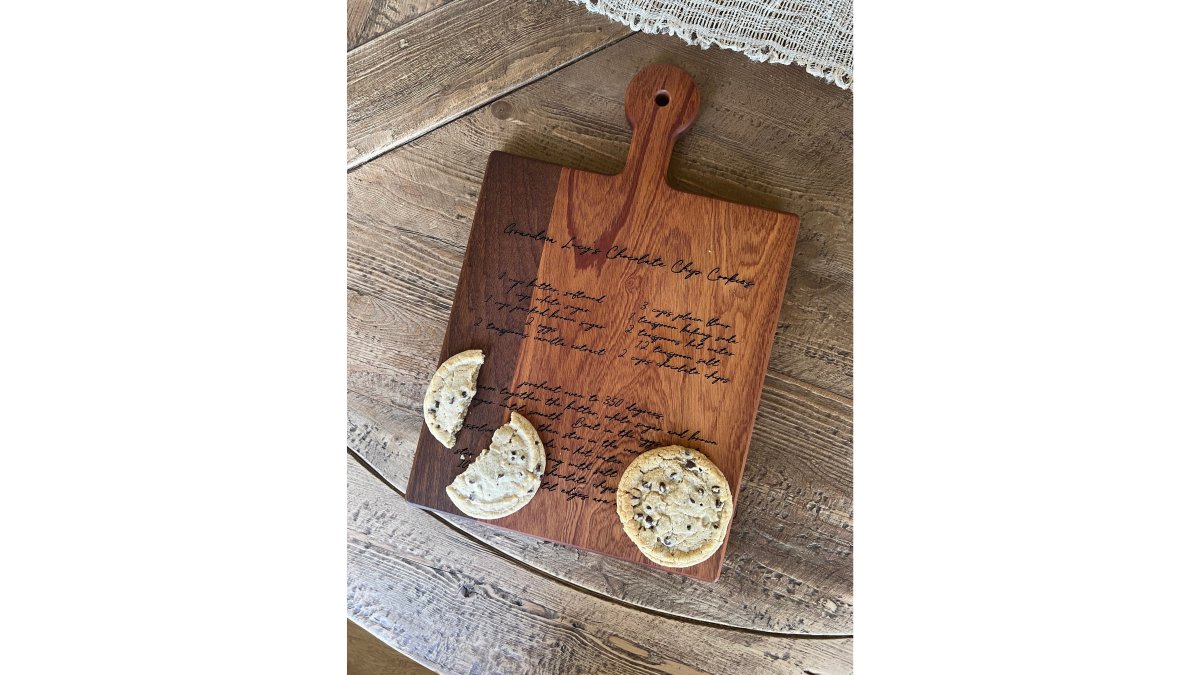
Meaningful handmade gifts amplify this effect. When a gift is handcrafted, the recipient knows real skill and time went into it and can see the quality in the details, knowledge that deepens the emotional impact.
The memories created by personalized gifts also tend to be shared. A beautiful personalized cutting board gets used when entertaining, shown to guests, with the story of who gave it and why.
Generic gifts rarely create that social resonance. People don't tell stories about a standard item they received, but they do tell stories about personalized gifts, especially visibly customized or beautifully made ones.
How to Choose a Thoughtful Gift That Resonates
Choosing a personalized gift that resonates requires more than adding a name to an object. The strongest gifts start with a clear read on the recipient and a realistic check on whether personalization is the right move at all.
Step 1: Decide whether personalization is appropriate
Personalization works best when three conditions line up: you know a specific, accurate detail about the recipient; the detail is something they'd be comfortable seeing on a permanent object; and the item fits how they actually live.
Experienced gift-givers ask one question before customizing: Would this person be happy to see this detail on a shelf in their home for the next ten years? If uncertain, skip personalization and put the thought into selection instead, a generic item in a color, size, or style the recipient genuinely uses.
Personalization is also a poor fit when the relationship is new, the recipient's tastes are unknown, or the detail is sensitive (a nickname only some people use, a private event, a photo of someone who may not want it displayed). A generic gift with a handwritten note carries the thoughtfulness without the risk.

Step 2: Choose what to customize
The most durable personalization is the least likely to become awkward. Names, initials, and dates tied to a widely celebrated event (a wedding, a graduation, a birth) age well. Inside jokes, temporary nicknames, and references to a phase of life age poorly.
Match the customization to the object. A cutting board rewards a family name or meaningful date because it's used and displayed in a shared space. A journal rewards initials or a short line because it's personal and often kept private. Jewelry rewards a date or single initial because it's worn close to the body.
Step 3: Check recipient preferences, privacy, and cultural fit
Before you commit, run a quick privacy and sensitivity check. Avoid full names, home addresses, phone numbers, or photos of people who haven't consented to being on a permanent object.
Cultural considerations matter too. Symbols, colors, and phrases carry different meanings across communities. If unsure, choose neutral personalization, a name, a date, a simple monogram, rather than a symbol or slogan. When the recipient's background differs from your own, ask a family member or close friend for a quick sanity check before ordering.
Step 4: Match the gift to the occasion and the relationship
The occasion should shape the scale of the gift, not just its content. A wedding gift can carry formal, celebratory personalization because the event is public and permanent. A housewarming gift should lean functional and welcoming.
The relationship sets the budget and intimacy level together. A close family member may treasure an heirloom-quality personalized piece; an acquaintance may feel burdened by a gift that seems too expensive or too personal. Matching the gift to the relationship is part of the thoughtfulness.
Step 5: Vet quality, proofing, and the maker's policies
Before ordering, confirm three things: how the personalization will be proofed, how long production and shipping will take, and the maker's policy on customization errors and returns. Reputable makers send a digital proof and give you a window to correct spelling, dates, and placement.
Check quality signals directly: material specifications, finish details, and whether the personalization is engraved, printed, or applied as a decal. Engraved and properly finished personalization holds up far better than surface printing over years of use and washing. A maker who is vague about materials or proofing is one to approach cautiously.
Handwritten Recipe Cutting Board →
Step 6: Compare value, not just price
A personalized gift is not automatically better or more expensive than a generic one, though personalized gifts better deliver value when the recipient will actually use them. Compare on four dimensions: upfront cost, durability, usefulness, and the likelihood the recipient keeps and uses it.
Budget should set the ceiling, not the goal. A thoughtful personalized gift in a modest range can outperform a generic gift at the same price because the personalization signals attention.
Meaningful Handmade Gifts: Quality, Durability, and Real Impact
The difference between mass-produced personalized items and handmade personalized gifts comes down to craftsmanship and intention.
Handmade personalized gifts typically last longer because they're built with better materials and more careful construction. A handcrafted wooden cutting board is sanded properly, finished carefully, and assembled to last decades.
Aesthetic quality matters too. Handmade items have a distinctive character mass-produced goods lack, visible wood grain, clean and intentional personalization.
Durability is where handmade personalized gifts truly shine.
The real impact of a handmade personalized gift is that it becomes part of someone's life permanently.
Practical Considerations: Timelines, Customization, and Value
A personalized gift is a small manufacturing project, and treating it like one prevents most of the disappointment people associate with custom orders. The practical realities break down into four areas: timelines, the proofing workflow, what happens when something goes wrong, and how to judge value against a generic alternative.
Production and shipping timelines
Timelines depend on the type of personalization and the maker's process. Mass-produced personalized items pulled from inventory can ship in days. Made-to-order items, engraved wood, embroidered textiles, printed photo goods, typically need production time before shipping, and handmade pieces often need more because they're built after the order is placed.
Work backward from the date you need the gift in hand. Add the maker's stated production time, shipping time, and a buffer for proofing rounds and carrier delays. Around major gift-giving periods, production queues and shipping networks slow down, so the buffer should grow.
The proofing workflow
The proofing step is where most customization errors are caught. A typical workflow: you submit the personalization details, the maker sends a digital proof or mock-up, you review it, and you approve it before production begins. The approval step is usually the point of no return.
Review the proof for spelling, capitalization, punctuation, date format, and placement. Read names letter by letter, the brain autocorrects familiar names and skips transposed letters. Confirm the date format the maker uses, since day-month and month-day conventions differ.
Errors, returns, and satisfaction policies
Return policies for personalized goods vary widely, and the variation matters more than the headline policy. Some makers remake or refund items with errors they introduced, a misspelling on their end, a design that doesn't match the approved proof, or transit damage. Others treat all personalized sales as final once production starts.
Before ordering, ask three questions: What happens if the item arrives with a customization error? What if it arrives damaged? What if the recipient simply doesn't like it? The answers tell you how much risk you're carrying.
Customization options and their trade-offs
More customization is not automatically better. Extensive options, multiple fonts, design variations, color choices, placement choices, give you more control but also more decisions to get wrong, longer production times, and often higher prices. Minimal customization, a single name or date in a fixed style, is faster, cheaper, and harder to botch.
The right level depends on how confident you are in the detail and how much time you have. If you know exactly what the recipient would want and have weeks to spare, extensive customization can produce a genuinely tailored gift.
Budget and value comparison
Personalized gifts are not always more expensive than generic ones, and not always better value. The honest comparison uses four dimensions: upfront cost, durability, usefulness, and the likelihood the recipient keeps and uses the item.
| Dimension | Generic gift | Personalized gift |
|---|---|---|
| Upfront cost | Often lower; no customization fee | Often similar or higher; may include a customization charge |
| Durability | Varies widely by item | Varies widely; engraving and quality finishing tend to hold up |
| Usefulness | Depends on fit to recipient | Depends on fit; personalization does not fix a poor fit |
| Likelihood of keeping | Lower for impersonal items | Higher when the personalization is accurate and meaningful |
A personalized gift wins on value when the recipient will actually use it, the personalization is accurate and durable, and the item is well made.
Budget should set the ceiling, not the goal. A thoughtful personalized gift in a modest range can outperform a generic gift at the same price because the personalization signals attention, but only if the underlying item is good.
Frequently Asked Questions
What makes personalized gifts more meaningful than generic ones?
Personalized gifts demonstrate that you invested time understanding the recipient's preferences and interests. This care and consideration triggers a stronger emotional response than a mass-produced item. When someone receives a custom gift with their name, initials, or a meaningful personal message, they feel valued and understood in a way generic gifts cannot replicate. The personal touch transforms a transaction into a gesture of genuine thoughtfulness.
How do I choose a thoughtful personalized gift that the recipient will actually love?
Start by considering the recipient's interests, lifestyle, and what they genuinely need or use daily. Personalized gifts work best when they enhance something practical or meaningful to that person. For example, a personalized heirloom cutting board suits someone who entertains or cooks, while a custom journal works for someone who writes or plans. Ask yourself: Will this item be used and cherished? Does the personalization add genuine value, or is it forced? The best personalized gifts merge customization with practicality.
Are meaningful handmade gifts worth the higher cost compared to mass-produced personalized items?
Handmade personalized gifts typically cost more because they're crafted individually with attention to detail and quality materials. A handmade cutting board or custom candle from a maker like Copper Fox Co ($48-$80) will outlast and outperform mass-produced alternatives because of superior craftsmanship and materials. These items develop character over time and become heirloom pieces, making them a better long-term value. For gift-giving occasions where you want something truly special and durable, the investment pays dividends in perceived value and lasting impact.
How long does it take to get a personalized gift made, and what if I'm on a tight deadline?
Production timelines for handmade personalized gifts vary by maker and complexity. Before ordering, check the maker's lead times clearly, some offer rush options, while others have standard timelines of 2-4 weeks. If you're on a deadline, communicate that upfront and ask about expedited options. Planning ahead is the safest approach, but many makers understand gifting urgency and can accommodate shorter timelines. Always verify delivery dates before placing an order, especially for milestone occasions like weddings or housewarmings.